Walk the Line: Johnnie Walker

johnnie walker bottles product line

This is Walk the Line: a series where I explore the entire product lines of the most popular liquor brands together with a panel of friends and tasters. Click here to view the entire Walk the Line series.


Johnnie Walker joins the Walk the Line series to help prepare us for the return of Mad Men on Sunday. Christina Hendricks (who plays Joan in the show) is the brand ambassador for Johnnie, which is the top-selling brand of whisky in the world. Prices of some Johnnie Walker varieties sell for hundreds of dollars, and every type of Johnnie is a blended scotch, as opposed to single malt. This means Johnnie Walker is a blend of different scotch varieties from different distilleries, and it also means their taste is well-balanced and predictable.

Johnnie Walker Red Label. Originally blended in 1909, this is the most affordable Johnnie of the line at $23 a bottle. Red Label is the scotch of choice for mixed drinks, stuff like a Rusty Nail or a Scotch and Soda. Red Label is a blend of “young malts,” so it’s a bit less mellow than a more mature scotch. This blend is dry and clean and the flavor is light.

Johnnie Walker Black Label. A blend of whiskies that are at least 12 years old, Black Label will run you $34 a bottle. Outside of maybe ice or a splash of soda or water (your preference), this Johnnie is one to drink straight. As this is an older scotch, it’s more mellow and has a more wood and spice in the flavor. This blend was the preferred one for all the testers except for one who prefers a smokier scotch. For the price and taste, Black is a great buy.

Johnnie Walker Double Black. A limited-edition release for Johnnie in 2011, Double Black was permanently added into the line late last year. Double Black retails for $40 in a taller, smoked glass bottle that hints about what lies inside: a blend of smokier whiskies from smaller Scottish distilleries. Double Black is surprisingly less aromatic than the others, but makes up for it with rich, smoky, slightly mossy flavor. This label was preferred especially by drinkers who love bolder, smokier whisky. One taster said it was like “smoke in a bottle.”

What about Drinking at Work?

dudes drinking beer, circa 1970's

With Mad Men Season 6 debuting on Sunday, this week’s posts will have a connected theme. Let’s start with a taboo question: what about drinking at work?

Let’s just establish that I am not suggesting that all the 1960’s stuff on Mad Men is good. How about Peggy smoking and drinking while pregnant? Or little Sally Draper playing “spaceman” in a dry cleaning bag? Yikes! Having a drink at work has sometimes gone badly even for the Mad Men, especially for Freddy Rumsen, who peed his pants right there at his desk.

Let me say that I have almost never had a job where drinking is appropriate, just like most of you. I’ve spent the greater part of the last decade working in education and I never drank alcohol at work, and teaching is clearly not one of the professions I’m talking about. Let’s just agree that there are professions that drinking will never be ok, like heavy machine operators, or pilots, probably most assassins.

There are still some professions where drinking is accepted, though, even though I suspect it happen less than it did in the 60’s. How Drinking Vodka Makes You More Creative summarizes a scientific experiment involving creative workers. They were tested on response time when they had has drinks until they were just below the legal limit. Their response and thought time was improved over non-drinkers. You can read through the science of the experiment here, titled “Alcohol Intoxication Facilitates Creative Problem Solving.”

Curious about corporate friendliness to booze, KegWorks interviewed a company about their monthly Craft Beer Exchange, which they consider part of corporate team building. Nathan Miloszewski, VoIP Supply’s Content and Conversations Leader, said “We have a pretty awesome environment and having a beer while on the clock is 100% acceptable so long as the person is being responsible and maintaining the company’s Core Values.”

So….what about drinking at the office? Do you ever enjoy a company-sanctioned tipple, particularly those of you in “creative” jobs? Post pictures of your office bar in the comments.

Portland Potato Vodka

akdov telmig

It shouldn’t be a shock to hear me say that I’ve enjoyed tasting the products that Eastside Distilling in Portland makes. From whiskies to rums, they’ve all proved to be excellent liquors. My expectations, then, were pretty high when I tasted Portland Potato Vodka.

Many folks assume that potatoes are the most common base for making vodka, but it’s actually grains like wheat or corn that are most often used. Potato vodkas like Karlsson’s (an advertiser at Simple Cocktails) are considered more “boutique” than your typical vodkas. I’ve tried 3 potato vodkas at this point, and they have a common earthiness to them and are occasionally herbal or minty.

Portland Potato ($23 retail) is pleasantly mild without a harsh alcohol bite. There is a very slight earthy scent that is followed by a nice, fresh, sweet finish. The flavor is full and it finishes clean and flavorless, like you’d expect from a quality vodka. I used PPV in Ed Wood’s favorite cocktail, the Vodka Gimlet, or as he called it, the “Akdov Telmig”:

Akdov Telmig

  • 2 oz vodka
  • 3/4 oz lime juice
  • 1/2 oz simple syrup
  • shake and serve up or on the rocks
  • garnish with a lime wheel

Lovoka

lovoka caramel liqueur

Lovoka is a caramel liqueur from South Africa that’s launching this year in the United States. Arriving in an aluminum bottle that reminds me of a bicycle flask, Lovoka (la-vah-cah) fills a pretty sparse niche – I can only think of one more brand of caramel liqueur on the market. “Serve chilled” is the instruction on the bottle, so if you store it in the fridge or freezer, the aluminum with frost up nicely.

Taste-wise, Lovaka is nice and sweet, just as you’d expect it to be. There’s a lot of opportunity to make some cocktails with it – stir it into a White Russian, mix with S’mores Vodka, or add a shot to a cup of coffee or a pint of Guinness. I made this simple cocktail with it (pictured above):

Betty Rubble (by Greg Mays)

Lovoka will be available this Spring in the U.S., starting in California, for $28 a bottle.

SilverCoin Tequila

silver coin tequila with cocktail

SilverCoin is the first tequila available from Santa Fe Tequila Company. Made from 100% blue agave and sold in a hearty hand-blown bottle, this tequila is available in about 6 states right now. SilverCoin Silver (unaged) is a quality tequila with lots of flavor, a very clean taste, and a fresh finish.

I have been a bit stuck lately with tequila. Using it for either Margaritas or shots, I haven’t had much success making other tequila cocktails until I got a copy of the Café Royal Cocktail Book (Amazon link). I found a tequila and gin cocktail that has a surprisingly great flavor combination. Here’s the recipe:

Señorita

  • 1 oz tequila
  • 1 oz gin
  • 1 oz lemon juice
  • a dash of grenadine
  • shake and strain into a chilled cocktail glass
  • garnish with a lemon wedge

Gin and Tonic

juniper green gin and jack rudy tonic

“In addition to being a marvelous dancer, Jack Rudy loved to entertain and was known to overindulge in drink, smoke, and his wife’s gourmet cooking.”

My first cocktail order at a bar was a “vodka martini: shaken, not stirred,” which is pretty embarrassing in hindsight. I actually said “shaken not stirred.” Sigh. I can thank the Gin and Tonic for setting me on a course to enjoy more classically-styled cocktails, though, and I’ve found G&Ts to be a pretty accessible drink for most people.

As you may gather from my occasional ramblings here at Simple Cocktails, I like things a certain way: fresh, natural, and enjoyable. I think it adds to the pleasure of cocktails and make home parties better. I avoid high fructose corn syrup, which means that the grocery-store tonic water like Schweppes or Canada Dry never make an appearance in my home bar. Hansen’s Natural makes Tonic (Amazon link), which I’ve been stocking in my bar for several months, but it’s too sweet for my taste.

All of that considered, I recently made the best-tasting Gin and Tonic that I have tasted. Here’s the recipe:

 Gin and Tonic

  • in a 10 oz glass filled with ice, add:
  • 1 1/2 oz gin
  • 1/2 oz tonic concentrate (see below for info)
  • top with club soda
  • lime wedge garnish
  • optional: add some mint leaves and a mint sprig

Now the individual components of this particular G&T include Juniper Green Organic Gin and Jack Rudy Tonic. Juniper Green has a touch of sweetness and a fresh, minty, herbal flavor ($33 a bottle). Jack Rudy is a traditional tonic that comes in a cool apothecary bottle ($32 for 2- 17 oz bottles). Jack Rudy has now spoiled me on tonics as it isn’t overly sweet and has more quinine/bitter flavor.

Powder Rum and Class V Vodka

syntax spirits rum and vodka

Syntax Spirits distills Class V Vodka and the newly-released Powder White Rum in Colorado. Proud of their heritage, they use 100% wheat and snow melt from their native state to distill their vodka.

Both the rum and vodka are functional in cocktails, though I don’t know if I’d recommend drinking them neat. At $25 each, the rum has a full-mouthed burn that gives your Daiquiris quite a punch. Their vodka is sharp, grainy, and almost chalky. It’s a pretty interesting tasting experience because it’s so full of flavor, which is unusual for vodka. I used Syntax Class V to make a lemon drop:

Lemon Drop

  • 1 1/2 oz vodka
  • 1 oz lemon juice
  • 1 tsp sugar
  • shake and strain into a chilled cocktail glass
  • lemon wheel garnish

Simple St. Patrick’s Day Cocktails

3 leaf clovers

Since the U.S. celebrates Irish heritage annually through “cultural” overindulgence on St. Patrick’s Day, I’m going to give you some easy recipe choices for your home bar that are neither green nor lame. Let’s start this list with a Simple Cocktails first: a beer cocktail!

Caramel Guinness

  • 1 1/2 oz caramel liqueur, such as Lovoka or Godiva
  • fill remainder of a pint glass with Guinness Extra Stout

Benjamin Guinness single-handedly saved St. Patrick’s Cathedral from ruin in 1860 with a £150,000 donation (roughly $15 million in 2013 money), paying for the entire cost of a full restoration of the church.

Potato Famine (by Greg Mays)

Irish Old Fashioned

  • Add 1 tsp of simple syrup to an old fashioned glass
  • Douse with 3 dashes of orange bitters
  • Add a splash of club soda and stir well
  • Fill glass with ice, add 2 oz of Irish whiskey, stir until cold
  • Take a piece of orange peel, squeeze over the glass and rub it around the rim
  • Top with another splash of club soda
  • Garnish with the orange peel

Thomas Tew Rum

thomas tew rum xyz cocktail

Thomas Tew Rum is distilled and aged in Rhode Island from blackstrap molasses. Named for the infamous Rhode Island Pirate, this rum is created in small batches and is tough to find outside of Rhode Island itself.

Thomas Tew Rum has the scent of molasses and maple syrup, but has a very dry finish. While Tew is a good sipping rum because of that clean sweet/dry combo, I found it is a particularly good rum for making mixed drinks. Here’s one of my favorite cocktails with dark rum: rich, sour, and sweet all at the same time:

XYZ

  • 1 oz dark rum (I used Thomas Tew)
  • 1 oz triple sec (I used Giffard Premium)
  • 1/2 oz lemon juice
  • shake and strain into a chilled cocktail glass
  • lemon wedge garnish

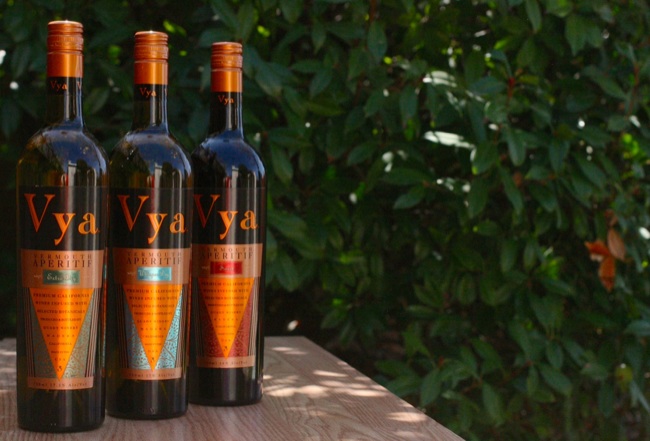
Vya Vermouth

vya vermouth

Vermouth is one of the first bottles you need to buy when you’re outfitting your home bar. A fortified wine that’s seeped with herbs, vermouth is higher-alcohol than wine and more shelf-stable. It’ll keep for weeks (sometimes months) in the fridge as opposed to wine which spoils within days.

Bottled in Madera, California, Vya Vermouth can be found for $15-20 a bottle. I’ll admit that I usually cheap out when it comes to vermouth, buying the $4 bottles at Trader Joe’s and I’ve thought that was good enough. As soon as I tasted Vya, though, I discovered that I was wrong. The cheaper vermouths are overly bitter and sometimes sour. Vya is softer, smooth, mild, and well-spiced.

Vya Extra Dry is a traditional martini vermouth. This version is acidic and floral, with the flavor balanced somewhere between fresh Italian herbs (like basil) and citrus. It makes a tasty martini and Vya complements the gin well as opposed to the cheap vermouths I’ve been using, which have been making my martinis harsh and sour.

Vya Whisper Dry is a unique vermouth that Vya has created, both less acidic and less herbal than Extra Dry. Whisper Dry is milder and fruitier and the flavor is more similar to white wine than a typical vermouth. Mix this vermouth with a high-quality vodka for a subtle, sweeter martini. I think this is the best Vya to drink by itself, on the rocks before dinner.

Vya Sweet is the vermouth you should use in a Manhattan cocktail or the Turf Club (below). This has a sweet red wine flavor, sure, but there’s also some cloves and cinnamon mixed in there to offset the sweetness. I could almost see this warmed on the stove for Christmas, it’s a really pleasant sweet/spice combination.

Turf Club

  • 1 1/5 oz of Old Tom gin (I used Tanqueray Malacca)
  • 1 1/5 sweet vermouth
  • 2 dashes of bitters
  • stir and strain into a cocktail glass
  • lemon peel garnish