Author Archives: Greg

Simple St. Patrick’s Day Cocktails

3 leaf clovers

Since the U.S. celebrates Irish heritage annually through “cultural” overindulgence on St. Patrick’s Day, I’m going to give you some easy recipe choices for your home bar that are neither green nor lame. Let’s start this list with a Simple Cocktails first: a beer cocktail!

Caramel Guinness

  • 1 1/2 oz caramel liqueur, such as Lovoka or Godiva
  • fill remainder of a pint glass with Guinness Extra Stout

Benjamin Guinness single-handedly saved St. Patrick’s Cathedral from ruin in 1860 with a £150,000 donation (roughly $15 million in 2013 money), paying for the entire cost of a full restoration of the church.

Potato Famine (by Greg Mays)

Irish Old Fashioned

  • Add 1 tsp of simple syrup to an old fashioned glass
  • Douse with 3 dashes of orange bitters
  • Add a splash of club soda and stir well
  • Fill glass with ice, add 2 oz of Irish whiskey, stir until cold
  • Take a piece of orange peel, squeeze over the glass and rub it around the rim
  • Top with another splash of club soda
  • Garnish with the orange peel

Thomas Tew Rum

thomas tew rum xyz cocktail

Thomas Tew Rum is distilled and aged in Rhode Island from blackstrap molasses. Named for the infamous Rhode Island Pirate, this rum is created in small batches and is tough to find outside of Rhode Island itself.

Thomas Tew Rum has the scent of molasses and maple syrup, but has a very dry finish. While Tew is a good sipping rum because of that clean sweet/dry combo, I found it is a particularly good rum for making mixed drinks. Here’s one of my favorite cocktails with dark rum: rich, sour, and sweet all at the same time:

XYZ

  • 1 oz dark rum (I used Thomas Tew)
  • 1 oz triple sec (I used Giffard Premium)
  • 1/2 oz lemon juice
  • shake and strain into a chilled cocktail glass
  • lemon wedge garnish

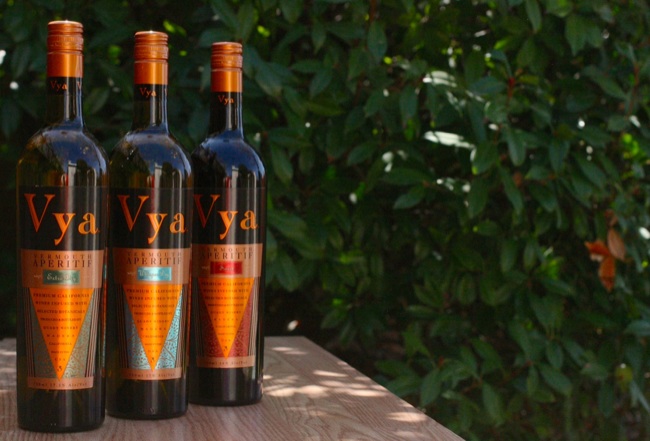
Vya Vermouth

vya vermouth

Vermouth is one of the first bottles you need to buy when you’re outfitting your home bar. A fortified wine that’s seeped with herbs, vermouth is higher-alcohol than wine and more shelf-stable. It’ll keep for weeks (sometimes months) in the fridge as opposed to wine which spoils within days.

Bottled in Madera, California, Vya Vermouth can be found for $15-20 a bottle. I’ll admit that I usually cheap out when it comes to vermouth, buying the $4 bottles at Trader Joe’s and I’ve thought that was good enough. As soon as I tasted Vya, though, I discovered that I was wrong. The cheaper vermouths are overly bitter and sometimes sour. Vya is softer, smooth, mild, and well-spiced.

Vya Extra Dry is a traditional martini vermouth. This version is acidic and floral, with the flavor balanced somewhere between fresh Italian herbs (like basil) and citrus. It makes a tasty martini and Vya complements the gin well as opposed to the cheap vermouths I’ve been using, which have been making my martinis harsh and sour.

Vya Whisper Dry is a unique vermouth that Vya has created, both less acidic and less herbal than Extra Dry. Whisper Dry is milder and fruitier and the flavor is more similar to white wine than a typical vermouth. Mix this vermouth with a high-quality vodka for a subtle, sweeter martini. I think this is the best Vya to drink by itself, on the rocks before dinner.

Vya Sweet is the vermouth you should use in a Manhattan cocktail or the Turf Club (below). This has a sweet red wine flavor, sure, but there’s also some cloves and cinnamon mixed in there to offset the sweetness. I could almost see this warmed on the stove for Christmas, it’s a really pleasant sweet/spice combination.

Turf Club

  • 1 1/5 oz of Old Tom gin (I used Tanqueray Malacca)
  • 1 1/5 sweet vermouth
  • 2 dashes of bitters
  • stir and strain into a cocktail glass
  • lemon peel garnish

Coffee Liquors

coffee ums and liqueurs

A few new coffee liqueurs are hitting the market, and I got to try them. Below Deck Coffee Rum retails for $18, Kahlua Midnight for $22, and Hoodoo Chicory is $24 for a half-sized bottle  (375 ml). Other than the coffee connection, these are all pretty different products.

Below Deck Coffee Rum is from Eastside Distilling in Portland, and it shows. Marketed as coffee rum rather than coffee liqueur,  Below Deck smells like your favorite corner coffee shop. This is a strong drink (70 proof), and while I tried mixing it in traditional coffee liqueur cocktails like a White Russian, I found Below Deck tasted the best on the rocks with a splash of cream.

Kahlua Midnight. The replacement for Kahlua Especial, Midnight is very much a Kahlua product. It has the iconic Kahlua flavor, but with less of the syrupy characteristics you find in standard Kahlua. It’s a stronger drink, too (70 proof), and much like Below Deck, it’s less mixable as a result. White Russians were too strong and unbalanced with Midnight, and I realized that Midnight and cream was the best fit here, too.

Hoodoo Chicory Liqueur. Made by the same folks that make Cathead Vodka, Hoodoo is closer to a traditional coffee liqueur. It’s lower proof  (40), so it’s a better fit for coffee cocktails. Chicory is a root that’s often used as a coffee additive or coffee substitute, particularly in the South, and as a result, Hoodoo is more herbal-tasting than the other here. Anyone familiar with New Orleans-style coffee will recognize the rich flavor. I took Hoodoo’s recipe for a Café au Lait, converted it up, and made a thermos full of it for a party:

cafe au lait thermos

Thermos of Café Au Lait

  • 10 oz Hoodoo Chicory Liqueur
  • 12 1/2 oz warmed milk
  • 25 oz of strong brewed coffee
  • while brewing the coffee, warm the Hoodoo and the milk on the stove over low heat, stirring constantly
  • once hot, pour it all into a big thermos like this one (Amazon link)

Infusions

gin rosemary infusion
by guest writer David Coveney, The Spirit Cellar Online

I have been doing liquor infusions at home for quite some time now, and I love using gin.  One of my favourite infusions is rosemary gin:  leave 20 sprigs of rosemary in an entire bottle of gin for around 9 hours, depending on the gin. If you use a richer gin like Tanqueray or Beefeater then leave the rosemary too steep for a little longer. If you are using a light gin like Bombay Sapphire or Martin Millers, then 9 hours is enough. Once the rosemary has fully infused, the gin will be a red/brown colour.

Are you a fan of those after-work Cosmopolitans? Why not make your own lemon vodka, instead of buying Ketel One Citroen? Simply peel 10 lemons, making sure you remove all the pith, as this will add too much bitterness. Add the peels them to a bottle of vodka and leave to infuse for 24 hours. Once the 24 hours is up, peel a further 10 lemons in exactly the same way, remove old peel from the vodka and add the fresh lemon peel.  This double infusion will create a fresh, zesty vodka after another 24 hours of infusing.  Perfect with a dash of simple syrup and soda water and brilliant in your Cosmos:

Cosmopolitan

  • 50 ml (1 1/2 oz) lemon vodka
  • 20 ml (1/2 oz) Cointreau (or orange liqueur/triple sec)
  • 25 ml (3/4 oz) lime juice
  • 20 ml (1/2 oz) cranberry juice
  • garnish with a lime wheel

If you have a sweeter tooth, mix two thirds of your new lemon vodka to 200ml (about 7 oz) of simple syrup. Mix it well and you have a fantastic, punchy, homemade Limoncello.

Walk the Line: Tanqueray

tanqueray flavors all bottles

This is Walk the Line: a series where I explore the entire product lines of the most popular liquor brands together with a panel of friends and tasters. Click here to view the entire Walk the Line series.


Tanqueray. The flagship Tanqueray in the green barrel-shaped bottle. Tanqeray is a classic, iconic London Dry gin with juniper as the primary flavor and traces of spice, coriander, and licorice. Tasters felt like the flavor was “classic gin” and those who prefer the stronger juniper really loved it. A bottle will run you $20.

Tanqueray No. 10. In 2000, Tanqueray 10 was created in the tenth still at the Tanqueray distillery. Meant as a premium and modern martini gin, 10 retails for $30. Tanqueray 10 is made in smaller batches than the flagship, and there is more citrus in the overall flavor. Tasters found Tanqueray 10 to be very balanced, with lots of flavors but none of them standing out as particularly  dominant. 10 finishes in your mouth very dry and martini fans thought this may just be the best martini gin they’d tried, saying it would taste great stirred on ice and served straight up.

Tanqueray Rangpur. Tanqueray Rangpur is named for the citrusy hybrid fruit that it’s made with. Lemon-lime-citrus is the substantially predominant flavor in Rangpur, with a hint of ginger and almost no trace of juniper. As a straight pour into tonic water, Rangpur wouldn’t require the typical lime wedge garnish for a gin and tonic. Tasters felt like Rangpur would be a great accompaniment to Indian or Asian food. Bottled at a lower proof than the two Tanquerays above (82 proof instead of 94), Rangpur will run you $22 a bottle.

Tanqueray Malacca. Originally hitting the market about 15 years ago, Malacca was discontinued a short time later and has subsequently become the unicorn of the spirits world, selling for hundreds of dollars a bottle. Re-introduced in February 2013 in limited quantity (100,000 numbered bottles), Malacca is based on an 1839 Charles Tanqueray recipe and some say it’s one of the truest gins you can find to the recipes from centuries ago.  Malacca is a very mild, soft gin that finishes with a hint of sweetness. It’s lower proof than those above (80) and is a friendly sip of gin with virtually none of the sharpness you find in London Drys like the flagship Tanqueray. Adorned in a unique gold-stamped and emerald/gold labeling, it comes in a crystal-clear bottle which signifies its uniqueness in the Tanqueray line. If you can find it before it’s gone again, Malacca run you about $30 a bottle.


Thank you for following the first several posts of the Walk the Line series these past 2 weeks. Expect to see other occasional explorations of large brands in the future as we walk their product lines here at Simple Cocktails!

Walk the Line: Jim Beam

jim beam bourbons and whiskies

This is Walk the Line: a series where I explore the entire product lines of the most popular liquor brands together with a panel of friends and tasters. Click here to view the entire Walk the Line series.


Jim Beam. The flagship bourbon and one of the top-sellers in the world, aged 4 years. The fire from the toasted barrels comes out in Beam White and it has a “hot” finish as a result, the tasters said it felt higher proof than it actually is. Ms. Ubon told me her favorite southern cocktail is to mix Beam with Coke, which they fondly call Brown Wine. Jim Beam is $15 per bottle.

Jim Beam Black. Using the same recipe as the white label bourbon, Black is aged 8 years and bottled at a higher proof. An affordable bourbon with a long age, Black is smoother and cooler than Beam white, and it marks an affordable ($20) upgrade from the flagship bourbon.

Red Stag. A black cherry flavored bourbon, and while it’s not marketed as a liqueur, Red Stag is quite sweet, with almost a snow-cone quality to the flavor. It seems that it’s meant to be mixed into an Adult Cherry Coke. Red Stag is a very popular line for Beam and very affordable at $15 per bottle.

Devil’s Cut. A newer member of the Beam clan, Devil’s Cut is Jim Beam bourbon that includes whiskey that’s steam-extracted from the barrel wood. Whiskey that evaporates from the barrel is traditionally called the Angel’s Share, so what’s left inside is the Devil’s Cut, right? This Beam variation is certainly woody and spicier on the tongue. For our tasting panel, was a favorite of the Beam line. Devil’s Cut is $25.

Jacob’s Ghost. The newest Beam-family whiskey, just hitting stores now. It’s named for Jim’s great grandfather Jacob Beam (the first Beam to sell whiskey). This is a unique white whiskey because it’s actually aged for a year and the color is filtered back out of the liquor, leaving a ghostly pale colored whiskey. It is certainly more mellow than other unaged whiskeys I’ve tasted, which often have the pungent quality of tequila. Tasters thought this one was almost like sake with a fruity finish. Ghost retails for $23.

Walk the Line: Bombay

bombay gin product line

This is Walk the Line: a series where I explore the entire product lines of the most popular liquor brands together with a panel of friends and tasters. Click here to view the entire Walk the Line series.


Bombay distills premium, modern gins using “vapor infusing,” which leads to a softer tasting gin overall.

Bombay London Dry. Bombay Dry was first introduced in 1959 and it has 8 botanicals that lead to a classic London Dry flavor with a touch of spice in the finish. Tasters who prefer classic London Drys liked the flavor of Bombay Dry, saying that it’s a good gin overall. Though not as widespread as the iconic Bombay Sapphire, Bombay London Dry can be found for $21 a bottle.

Bombay Sapphire. Bombay Sapphire arrived in 1987 in a distinctive square blue bottle with the botanicals etched into the sides. Sapphire takes the recipe of 8 from the original Bombay Dry and adds cubeb berries and grains of paradise for a total of 10 botanicals. Tasters found Sapphire to be an extremely balanced gin, with flavors of lemon and berries, a touch of spice, and a long, lingering taste on the tongue. Sapphire is a bit sweeter than other London Drys and gin’s typical piney flavor is more subdued. At about $23 a bottle, Bombay Sapphire is extremely popular, and has a mild, fruity, soft profile overall.

Bombay Sapphire East. In 2012, Sapphire East was introduced with 12 botanicals, adding lemongrass and black peppercorns to the existing Sapphire infusion. At $30 a bottle, Sapphire East is mostly peppery, and the flavor is less balanced than Sapphire as the two new ingredients are the primary flavors. Initially tasting like Bombay Sapphire, followed by a peppery licorice bite, Bombay Sapphire East finishes fast and cool with a faint trace of sweetness.

Walk the Line: Jack Daniel’s

jack daniel's whiskies

Welcome to a series at Simple Cocktails called Walk the Line, where I explore the entire product lines of the most popular liquor brands together with a panel of friends and tasters. I realized in a recent visit to the liquor store that there are some huge brands with different versions of their liquors, and I wasn’t really sure which was the best, or why, or how they differ from the flagship brand. I’m sure that there are others who feel the same, so let’s Walk the Lines of these brands together. Click here to view the entire Walk the Line series.


While it almost seems silly to begin with something as familiar and iconic as Jack Daniel’s whiskey, some people take this brand for granted in spite of its rich and fascinating history. We tasted the 3 primary expressions of Jack Daniel’s Tennessee Whiskey. Here’s the breakdown:

Jack Daniel’s Old No. 7. The flagship black-label Jack Daniel’s has been distilled for over 100 years. Jack differentiates itself in the market by being a Tennessee Whiskey, filtered through 10 feet of sugar maple charcoal before it’s aged in barrels. It had been a while since most of our tasters had Jack on it’s own, and we admittedly expected to be tasting “cheap whiskey.” Old No. 7 pleasantly surprised the panel with it’s quality, though, especially for $20 a bottle. This flagship Jack has a familiar sweet corn flavor and a smooth, lingering finish.

Gentleman Jack. Introduced in 1988, Gentleman is the mid-range Jack. The recipe is the same as with Old No. 7, but this version is charcoal mellowed twice: once before and once after barrel aging. Gentleman Jack is sweeter and smoother than Old No. 7 because of the double mellowing, and the tasters really liked the flavor and price (about $30) of this one in particular.

Jack Daniel’s Single Barrel Select. This is the premium Jack Daniel’s product. While it’s life begins the same as the other Jacks, Single Barrel Select is chosen from the top barrels in the aging house at the distillery.  Those barrels experience the biggest temperature fluctuations, and as a result Single Barrel Select has a complexity that warrants the  higher-priced bottle (about $45). This whiskey has a rich color, and the tasters all smelled traces of maple syrup, though the flavor is not as sweet as it’s little brothers. Bottled at a higher alcohol content than the others, tasters felt Single Barrel Select is much more of a serious sip and should share the shelf with other high-quality American whiskeys.

What’s an Amaro?

aperol cynar campari

Amaros are already very popular in the craft bartending scene, so it’s a good idea to get you home bartenders on board as well. An “amaro” is an Italian bitter liqueur, usually meant as a aperitif (before-dinner drink) or digestif (after-dinner drink). I realize that I talk about bitters all the time, but remember there are 2 types of bitters: drinkable and non-drinkable. Angostura bitters are meant as a cocktail flavoring, you’d never pour a bunch on ice and drink it straight. Amaros are drinkable bitters, though.

There are a long list of Amaros, but 3 of the most popular are Campari, Aperol, and Cynar (pronounced CHEE-nar). The bitterness of these helps to offset the sweetness that liqueurs have, and all three of these are good served over ice, mixed with club soda, or in a cocktail.

Campari you’ll recognize as an essential ingredient for the Negroni. It’s electric red, slightly bitter (think orange rind bitter), but also quite sweet and low in alcohol (about 20%).

Aperol is similar to Campari, though it’s lower in alcohol (11%) and more orangey, both in color and flavor. It’s very refreshing and easy to drink, and I use it as a substitute for Campari in a Negroni, or just serve it over ice after dinner.

Cynar is a dark, herbal liqueur that’s 13% alcohol. It’s primary flavor is artichoke – note the glorious artichoke logo on the bottle above. The flavor of Cynar reminded me a little bit of Fernet Branca, minus the mintiness, or maybe like a less sweet Jagermeister. It’s an herbal, slightly syrupy, drink with a dry, clean finish. Drink Spirits recommends it as a top 10 liquor to carry in a flask.

Here’s a Cynar recipe, a take on a Manhattan, originally published in Imbibe Magazine:

Little Italy

  • 2 oz rye whiskey
  • 1/2 oz Cynar
  • 3/4 oz sweet vermouth
  • stir on ice and strain into a chilled cocktail glass
  • garnish with 2 cherries